
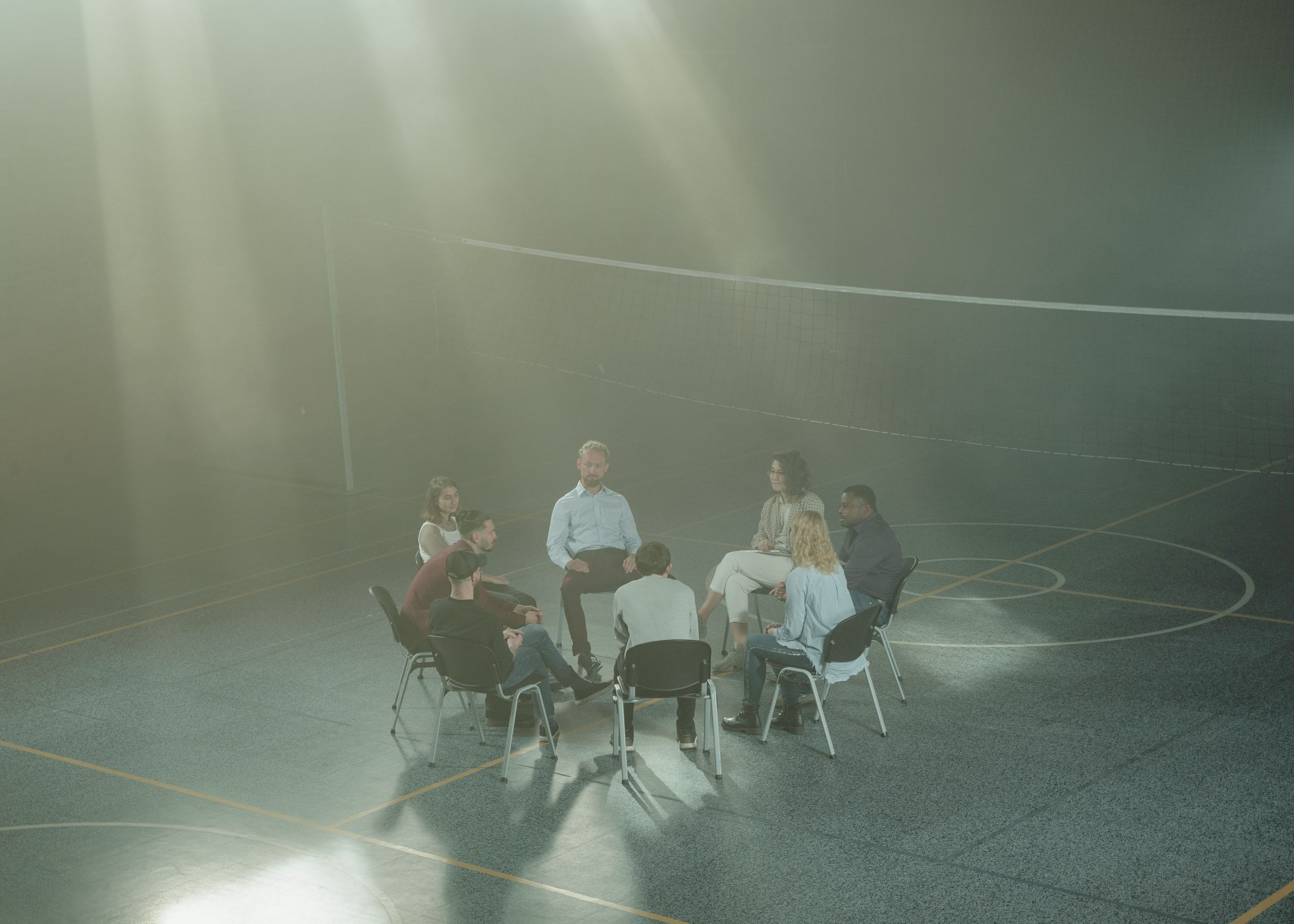
Online Group Support Sessions
A regular space to be heard, be understood, and know you are not the only one.
Something people have been asking for.
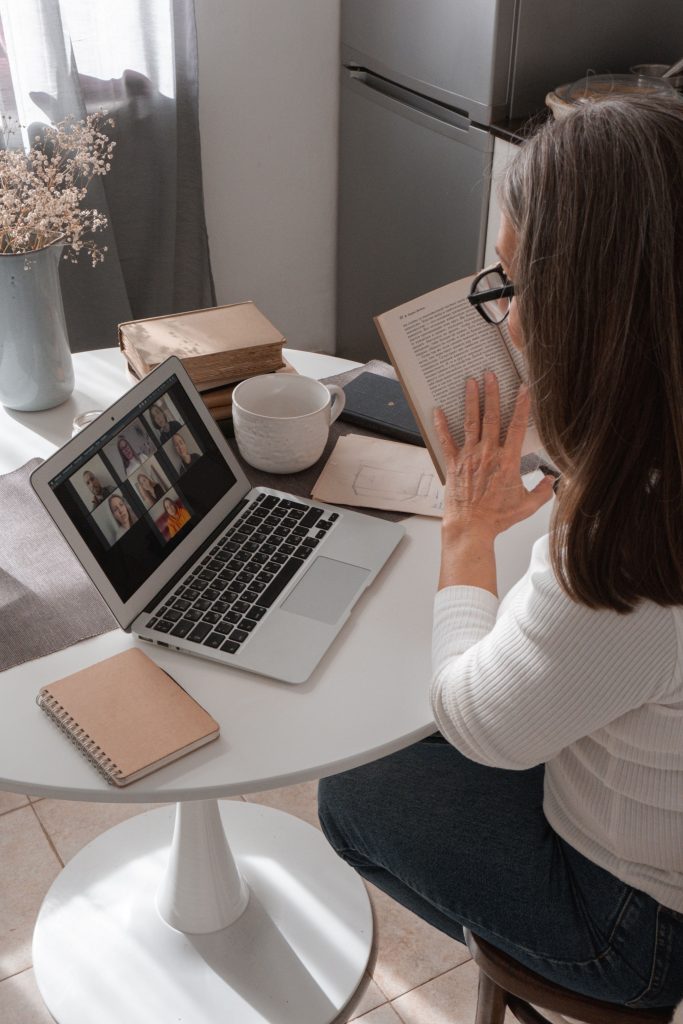
For a while now, people have been asking whether there’s a way to connect with others who understand this — not just me, one to one, but a room of people who have lived some version of the same thing. This is that. A recurring online group, held over Zoom, at a price that means it can be there for you regularly, not just once in a while.

Upcoming Sessions
- Sunday 27 September 2026, 7:30pm
- Sunday 25 October 2026, 7:30pm
- Sunday 22 November 2026, 7:30pm
- Sunday 20 December 2026, 7:30pm
- Sunday 17 January 2027, 7:30pm
- Sunday 14 February 2027, 7:30pm
Sessions continue every 4 weeks after this, always on a Sunday evening. The full, up-to-date list of dates is shown when you book.
£10 · 1 hour · Online via Zoom · UK and International
Why a group, as well as one-to-one.
There is something that happens when you hear someone else describe your exact experience, in their own words, without you having to explain any of it first. It stops feeling like something only you have lived through. Hearing how other people have made sense of it — what worked, what didn’t, what they wish they’d known sooner — teaches you things a single conversation can’t. And it tells your nervous system, not just your mind, that you are not the only one going through this. That matters.
This also works well alongside coaching.
The group is a place to be understood and to learn from others. One-to-one coaching is where we work on specifics — your work, relationships, health, nervous system, a healthy sustainable future — one session at a time, built around exactly where you are. Many people use both: the group for connection and perspective, coaching for the focused work on their own life.
Understanding what happens in your body — and what to do about it.
If you’ve lived through coercive control, your nervous system remembers it, even when the danger has passed. A tone of voice, a phrase, a date on the calendar — and suddenly you’re back there, heart racing or completely shut down, long before your thinking mind has caught up. That’s not a flaw. It’s a nervous system that learned, the hard way, to protect you.
A trigger isn’t a sign that you’re broken, or going backwards. It’s a signal — something has been recognised, correctly or not, as danger. The work isn’t to stop triggers happening. It’s to recognise them for what they are, understand them in plain terms, and know a handful of simple ways to bring yourself back: feeling your feet on the floor, slowing your breath, naming what’s happening — even just in your head — ‘this is my alarm going off, and I am safe right now.’ Small, physical, repeatable things. Not therapy exercises — just ways of helping your body catch up with the fact that the room you’re in now is not the room the danger happened in.
This is what lets you self-lead, on the harder days as well as the easier ones — not because the difficult days stop coming, but because you have something to do when they do. It’s how you keep functioning, day to day and long term. How you protect what you’ve built, what you’ve studied for, what you’ve worked hard for, instead of losing it to a nervous system stuck on emergency mode. How you think clearly enough, and remember clearly enough, to make good decisions again. How you keep the people who don’t have your best interests at heart further from your life, so their control over you loses its grip. Recovery isn’t a straight line, and it isn’t about pretending the last chapter didn’t happen — it’s about building toward the point people describe as ‘thriving’ rather than surviving. Living, not just getting through the day — for yourself, and for the people who matter to you.
Who it’s for
Anyone affected by coercive control — survivors of narcissistic abuse, parental alienation, family scapegoating, workplace or community harassment, spiritual and relationship abuse. You don’t need to have done coaching first. UK and international, wherever you’re joining from.
A few things to keep everyone safe
- Please don’t name anyone else in the session, and please don’t discuss any live or ongoing court case — for legal reasons, and out of respect for people who aren’t there to speak for themselves.
- If you’d rather not be identifiable, set your Zoom display name to something that doesn’t give away who you are.
- What’s shared in the group is asked to stay in the group. The Zoom host will hold to that also — but with several people in a session, it’s not guaranteed what others do with what they hear, so please share at the level you’re comfortable with.
- Please join with your mic / sound off, to avoid feedback.
- Please make sure to have your video camera turned on at the start. It’s ok to turn the camera off during the session.
Prefer to talk one-to-one?
What happens in a session
Sixty minutes over Zoom. No pressure to speak if you don’t want to — some weeks you’ll want to share what’s going on for you, some weeks you’ll want to sit, listen, and take from others. Both are completely fine. Each session opens with a ‘safe space’ and a short check-in. It’s a shared, community-guided conversation from there.
How to join
Book your place. The Zoom link will be on your booking confirmation. You’ll wait in the Zoom waiting room and you’ll be let in — the link only ever goes out through booking, so please don’t share it on. Sessions are not recorded.
Booking and payment
Payment is required to confirm your place, and holds your seat for that session. If you have concerns about payment showing on a shared bank statement, email support@thepowerandcontrolwheel.co.uk before booking — we’ll arrange it privately and safely.
There is no refund for group sessions — once paid, that’s it. Group size is kept small enough to stay personal, so please only book if you’re able to attend.
Good to know before you book
What it costs
£10 per session · every 4 weeks on a Sunday evening · 1 hour · online via Zoom.
Payment confirms your place. There is no refund once paid — once you’ve booked, that place is held for you.
Not therapy, not legal advice
This group, and my coaching, is a supportive, forward-focused space. It is not therapy, counselling, or legal advice, and I am not a licensed therapist, clinician or solicitor. There is no diagnosing, clinical treatment, or crisis / emergency support.
If it becomes clear your needs go beyond what a group or coaching can offer or the host’s scope of practice, the host will let you know honestly and respectfully.
Confidentiality and safeguarding
What’s shared is taken seriously and treated as confidential. This would only ever be broken if there’s an immediate risk of serious harm, a court or coroner’s order, or a disclosure involving terrorism or FGM — and where possible, this will be discussed with you first.
Because this is a shared, group space, there is no guarantee what other members do with what they hear — please bear that in mind when deciding what to share.
If you are in immediate danger, call 999.
PACW Support Line: 0333 242 5348 | National Domestic Abuse Helpline (women): 0808 2000 247 (free, 24 hours) | Men’s Advice Line: 0808 801 0327 | Galop (LGBTQ+) 0800 999 5428 | Samaritans: 116 123 | NHS 111 | Victim Support 08 08 16 89 111
USA — 988 Suicide and Crisis Lifeline | National Domestic Violence Hotline 1-800-799-7233