

Finding the answers you need
support@thepowerandcontrolwheel.co.uk
0333 242 5348 (UK) +44 333 242 5348 (International)
This page answers the questions most frequently asked by survivors, targeted parents, professionals and anyone trying to understand narcissistic abuse, parental alienation and coercive control. Every answer is based on published research, peer-reviewed evidence and official UK sources. Where data changes regularly, you are directed to the source rather than given a figure that will date.
This information does not constitute legal, medical or therapeutic advice. Where professional guidance is needed, you are signposted to the appropriate services.

1.5m men
480,000
The Power and Control Wheel
What is the Power and Control Wheel?
The Power and Control Wheel is a visual framework developed in Duluth, Minnesota in the 1980s by Ellen Pence and Michael Paymar. It maps the behaviours used by an abusive person to maintain power and control, grouped around an outer ring with “Power and Control” at the centre.
The Duluth wheel frames the perpetrator as male and the victim as female. It is widely used by CAFCASS, social work services, police and the family courts in the UK.
The Power and Control Wheel at thepowerandcontrolwheel.co.uk applies this framework without a gendered frame, consistent with the peer-reviewed research evidence that abuse is not primarily a male behaviour.
Source: Domestic Abuse Intervention Project (DAIP), Duluth, Minnesota. theduluthmodel.org
What are the eight areas on the Wheel?
- Coercion and threats
- Intimidation
- Emotional abuse
- Isolation
- Minimising, denying and blaming
- Using children
- Economic abuse
- Entitlement / privilege
Note: the original Duluth wheel names “male privilege” as the eighth spoke. Non-gendered versions replace this with “entitlement” — the belief that one person has the right to control another.
Source: theduluthmodel.org
What is the Duluth Model — and is it still relevant?
The Duluth Model is embedded in CAFCASS practice, the Domestic Abuse Act 2021, and much of the statutory response to domestic abuse in the UK. It has attracted significant academic criticism. Its gendered framing is not supported by the peer-reviewed evidence base. Research consistently shows abuse occurs across genders in broadly equal proportions. The framework for identifying abusive behaviours remains valid. The gendered framing does not.
Sources: Straus, M.A. (2010). Partner Abuse, 1(3). Harman et al. (2019). Psychological Bulletin. Hine et al. (2023). Journal of Family Violence.
Is there a non-gendered version of the Wheel?
Yes. Several non-gendered adaptations retain the eight-spoke structure but replace “male privilege” with “entitlement.” The Duluth Model also produced an Equality Wheel. Both at theduluthmodel.org.
Narcissistic Abuse and Personality Disorders
What is narcissistic abuse?
Narcissistic abuse is a pattern of manipulation, control, exploitation and psychological harm following idealisation, devaluation, then discard. Within that cycle: gaslighting, isolation, emotional manipulation, projection, DARVO, triangulation and intermittent reinforcement. It occurs in intimate partner relationships, family systems, workplaces, faith communities and social groups.
Sources: Bancroft, L. (2002). Why Does He Do That? Freyd, J.J. (1997). Feminism & Psychology, 7(1).
What is NPD — Narcissistic Personality Disorder?
NPD is a diagnosable condition in the DSM-5 and ICD-11. A diagnosis requires five or more of nine criteria:
- Grandiose sense of self-importance
- Preoccupation with fantasies of unlimited success, power or brilliance
- Belief in being special or unique
- Requirement for excessive admiration
- Sense of entitlement
- Interpersonal exploitation
- Lack of empathy
- Envy of others, or belief others envy them
- Arrogant or haughty attitudes
A person does not need an NPD diagnosis for narcissistic abuse to be real and harmful. NPD exists on a spectrum and frequently co-occurs with other Cluster B personality disorders.
Sources: American Psychiatric Association (2013). DSM-5. WHO (2019). ICD-11.
What is the difference between overt and covert narcissism?
Overt (grandiose) narcissism is the more visible type — dominant, boastful, entitled, easily recognised.
Covert (vulnerable) narcissism is significantly harder to identify. The covert narcissist may appear shy, self-effacing, quietly put-upon, or as the one who has been wronged. The same core traits are present but expressed through martyrdom, passive-aggression, sulking and playing the victim. Within the inner circle the damage can be just as severe as the overt type — and often more so because it is difficult to name and easy for others to disbelieve.
In professional settings such as court, CAFCASS interviews or school meetings, a covert narcissist may present as calm and credible while the targeted person appears emotional or unstable. This dynamic — DARVO — is well-documented in the research literature.
Sources: Wink, P. (1991). Journal of Personality and Social Psychology, 61(4). Miller, J.D. et al. (2011). Journal of Personality, 79(5).
What is Cluster B — and what does it include?
Cluster B is the “dramatic, emotional or erratic” cluster in the DSM-5:
- Narcissistic Personality Disorder (NPD) — grandiosity, entitlement, lack of empathy
- Borderline Personality Disorder (BPD/EUPD) — emotional dysregulation, fear of abandonment, unstable identity
- Antisocial Personality Disorder (ASPD) — disregard for the rights of others
- Histrionic Personality Disorder (HPD) — excessive emotionality and attention-seeking
Co-morbidity within Cluster B is common.
Source: American Psychiatric Association (2013). DSM-5.
What is the difference between a narcissist and a psychopath?
A person with NPD typically has emotional responses — shame, humiliation, rage — and reactive behaviour. A person with psychopathy has a more profound structural absence of empathy with callous disregard and calculated behaviour. A psychopath is by definition also a narcissist. A narcissist is not necessarily a psychopath. “Malignant narcissist” (Kernberg) describes a combination of NPD, antisocial behaviour, aggression and sadism — a more dangerous configuration.
Sources: Hare, R.D. (1993). Without Conscience. Guilford Press. Babiak & Hare (2006). Snakes in Suits. Paulhus & Williams (2002). Journal of Research in Personality, 36(6).
Are psychopaths born that way — and is NPD different in its origins?
Psychopathy has a neurobiological basis. Brain imaging has identified structural and functional differences in connections between the ventromedial prefrontal cortex and the amygdala (Koenigs et al., 2011). These differences appear to be present from early in life.
NPD involves a gene–environment interaction. A genetic predisposition (23–59% of the trait) is shaped by early childhood experiences. The fact that NPD may have roots in a difficult childhood does not transfer responsibility for the harm caused.
Sources: Koenigs, M. et al. (2011). Journal of Neuroscience, 31(48). BMC Psychiatry (2024). doi:10.1186/s12888-024-06307-9.
What is gaslighting?
Gaslighting is a form of psychological manipulation in which a person is made to question their own perception, memory and sanity. In narcissistic abuse it involves persistent denial of events, distortion of what was said, dismissal of the target’s responses, and the creation of a false reality. Over time it erodes the target’s trust in their own mind.
Source: Sweet, P.L. (2019). American Sociological Review, 84(5). Serious Crime Act 2015, s.76.
What is trauma bonding?
Trauma bonding is a psychological response to intermittent abuse and reward cycles in which a person develops a strong emotional attachment to the person harming them. The cycle activates the same neurochemical processes as addiction. It is not a character flaw. It is a neurobiological response to a specific pattern of harm.
Sources: Dutton, D.G. & Painter, S. (1981). Victimology, 6. Carnes, P. (1997). The Betrayal Bond.
Can children become trauma bonded to a gatekeeping parent?
Yes — and this is one of the most important and most underrecognised mechanisms in parental alienation.
Intermittent reinforcement: The alienating parent alternates between warmth and withdrawal, activating the same dopamine and stress response as adult trauma bonds.
Shared narrative and identity: The co-constructed story about the targeted parent becomes part of the child’s own identity. Questioning it feels like self-destruction.
Shared emotive memory formation: Emotionally charged experiences with the alienating parent are encoded as vivid memories (McGaugh, 2004). The child’s emotional landscape is asymmetric in a way that feels like evidence.
Enmeshment: The alienating parent treats the child as a confidant. The child’s sense of worth becomes bound up in the gatekeeping parent’s approval.
A child’s strongly felt rejection of a targeted parent may be evidence of what has been done to the child, not of what that parent has done.
Sources: Baker, A.J.L. (2007). Adult Children of Parental Alienation Syndrome. W.W. Norton. McGaugh, J.L. (2004). Annual Review of Neuroscience, 27. Harman, J.J. et al. (2018). Psychological Bulletin, 144(12).
What is the narcissistic abuse cycle?
Stage 1 — Idealisation (love bombing): Intense attention, affection, mirroring and validation. Creates the baseline the target spends the rest of the relationship trying to return to.
Stage 2 — Devaluation: Withdrawal of warmth, criticism, contempt, gaslighting, blame-shifting. Interspersed with mini-idealisations that reset the cycle.
Stage 3 — Discard and hoovering: Mini-discards happen throughout the relationship, followed by hoovering. This is the engine of the trauma bond.
Stage 4 — The shelf and the relationship that does not end: The target was an object providing supply. When the relationship ends, the object representation does not cease to exist. Hoovering may come months or years later. For survivors who share children, this stage does not pass.
The reproduced script: What felt like a unique personal experience was likely a reproduced pattern applied to a new target.
Sources: Kernberg, O.F. (1975). Borderline Conditions and Pathological Narcissism. Bates, L. & Hine, B. (2023). MDPI Social Sciences, 14(1).
What is grey rock? What is yellow rock? What does “the mask drops” mean?
Grey rock: Give only factual minimal responses, show no emotional reaction.
Yellow rock: A modified version for co-parenting — slightly warmer, child-focused tone while maintaining clear limits on personal disclosure.
The mask drops: For the overt narcissist this tends to be dramatic. For the covert narcissist it is far more subtle — a barely perceptible shift in tone, a momentary edge of disdain. These moments matter — they are often the only external evidence survivors have that what they experience privately is real.
Duper’s delight (Ekman): the involuntary flash of pleasure when successfully deceiving someone.
Contempt is distinct from ordinary criticism. Gottman identifies it as the single strongest predictor of relational harm.
Sources: Ekman, P. (2003). Emotions Revealed. Times Books. Gottman, J.M. & Silver, N. (1999). The Seven Principles for Making Marriage Work.
What counts as abuse — legally and practically?
Under the Domestic Abuse Act 2021, abuse includes:
- Physical or sexual abuse
- Violent or threatening behaviour
- Controlling or coercive behaviour (Serious Crime Act 2015, s.76)
- Economic abuse — adversely affecting a person’s ability to acquire, use or maintain money
- Psychological, emotional or other abuse
The Act extended the definition to include children as victims in their own right. Coercive control carries up to five years imprisonment.
Sources: Domestic Abuse Act 2021. Serious Crime Act 2015, s.76.
Parental Alienation
What is parental alienation?
Parental alienation describes the process by which a child is manipulated — through the systematic behaviour of one parent — into rejecting, fearing or refusing contact with the other parent, without legitimate cause. The child is not only turned against the targeted parent but denied the psychological freedom to love, think about or include that parent without fear. The targeted parent is effectively erased from the child’s emotional world.
Parental alienation is understood in the research literature as a form of child abuse and intimate partner violence. The consequences extend far beyond childhood.
Sources: Harman, J.J., Kruk, E. & Hines, D.A. (2018). Psychological Bulletin, 144(12). Baker, A.J.L. (2007). Adult Children of Parental Alienation Syndrome. W.W. Norton.
Is parental alienation “debunked science”?
No. The behaviours that constitute parental alienation are recognised and documented in a substantial peer-reviewed literature.
The FJC’s misrepresentation of Hine et al. (2023): The December 2024 FJC Guidance implied alienating behaviours resulting in alienation are rare. Dr Ben Hine publicly pushed back: the research does not say that. His 2–4% figures represent a very large number of families at population level.
CAFCASS and the child’s voice: CAFCASS places significant weight on the child’s expressed wishes. In alienation cases the child’s voice has been hijacked — the views expressed are the product of sustained conditioning. In the most serious cases, the child’s expressed preference is effectively a hostage statement.
Parental estrangement: Genuine estrangement by an adult child making an autonomous decision is entirely different from a child conditioned to reject a parent who poses no genuine risk.
The Harlow research: Harlow’s primate experiments (1958) showed that when infant monkeys were subjected to harm by surrogate mothers, the attachment bond was strengthened, not weakened. Children who are genuinely abused by a parent do not typically reject that parent. A child who completely rejects a parent who has not harmed them is displaying the inverse of what attachment research predicts.
Sources: Harman, J.J. et al. (2024). Taylor & Francis. Hine, B. et al. (2023). Journal of Family Violence. Hine, B. (December 2024). drbenhine.wordpress.com. Harlow, H.F. (1958). American Psychologist, 13(12). Bowlby, J. (1969). Attachment and Loss. Basic Books.
Is parental alienation recognised in UK law?
Parental alienation is not named as a specific offence in UK legislation. However, coercive and controlling behaviour is a criminal offence under the Serious Crime Act 2015 (s.76), and parental alienating behaviours can constitute coercive control. The family courts can make and enforce Child Arrangement Orders.
Sources: Serious Crime Act 2015, s.76. Children Act 1989. cafcass.gov.uk
What is the presumption of parental involvement — and what has changed?
Section 1(2A) of the Children Act 1989 created a legal presumption that the involvement of a parent in a child’s life would further the child’s welfare. On 22 October 2025, the UK Government announced its intention to repeal this presumption (Written Ministerial Statement, Baroness Levitt KC). For targeted parents, the removal potentially creates a new barrier — courts will no longer assume contact with both parents is beneficial. Check bills.parliament.uk for current legislative status.
Sources: Written Ministerial Statement, Baroness Levitt KC, 22 October 2025. questions-statements.parliament.uk.
What is a C100? What is a Section 7 report? What is a C1A?
C100 — the application form for a Child Arrangements Order. Applicants must generally attend a MIAM first. Download from: gov.uk/government/publications/form-c100-application-under-the-children-act-1989
Section 7 report — a welfare report prepared by CAFCASS or a local authority social worker, ordered by the family court. Includes interviews with both parents and the child and welfare recommendations to the court.
C1A — an allegation of harm form submitted with a C100 when alleging domestic abuse. Triggers Practice Direction 12J. Download from: gov.uk/government/publications/form-c1a-allegations-of-harm-and-domestic-violence
Sources: Children Act 1989, s.7. Practice Direction 12J. cafcass.gov.uk
What is CAFCASS and what does it do?
CAFCASS — the Children and Family Court Advisory and Support Service — is an independent public body that safeguards and promotes the welfare of children involved in family court proceedings in England. CAFCASS officers carry out welfare checks, write Section 7 reports, act as Children’s Guardians, and make recommendations to the court. CAFCASS Cymru is the equivalent service in Wales. For current information: cafcass.gov.uk
Do separated parents have a legal right to see their children?
No. There is no absolute legal right for a parent to spend time with their child under English and Welsh law. The right belongs to the child — the right to have a relationship with both parents where that is in the child’s best interests. Section 1(1) of the Children Act 1989 places the child’s welfare as the court’s paramount consideration.
Source: Children Act 1989, s.1(1).
Is parental alienation a gendered issue?
No. The peer-reviewed research consistently shows that mothers and fathers perpetrate and are targeted by parental alienating behaviours in broadly equal proportions. Fathers are statistically more likely to be the targeted parent not because mothers alienate more, but because structural factors create greater vulnerability for non-resident parents. Targeted mothers are among the most invisible people in the family justice system.
Sources: Harman, J.J. et al. (2019). Psychological Bulletin, 144(12). Hine, B. et al. (2023). Journal of Family Violence. Harman, J.J. & Lorandos, D. (2021). Psychology, Public Policy, and Law, 27(4).
Will my children return?
Some children come back. Some do not. There is no reliable way to predict which it will be for your child.
Research by Dr Amy Baker on adults who were alienated as children shows that many do eventually seek out the targeted parent — often in adulthood, once they are no longer under the direct influence of the alienating parent. But the timeline varies enormously. It may be years. Even when contact does resume, it rarely follows the pattern targeted parents hope for. A child may make contact, meet you, and then go quiet again. That one meeting may have been what they needed at that point.
Why some do not come back: the child’s nervous system, attachment system and developing identity all reorganised around the reality they were given — because that was the only way to survive. That reorganisation runs deep. Undoing it requires safety, time and internal resources the child may not yet have. The continued presence of the alienating parent or network, the depth and duration of the conditioning, and the psychological cost of reopening something that has been sealed are all real factors.
Consider what you went through as an adult — with some capacity to reason, to seek support, to make sense of what was happening. You were still profoundly affected. That child had none of that capacity. They adapted because it was the only option available to them.
What tends to help: maintaining a stable, findable presence. Not repeatedly reaching out when they have signalled they need space. Not posting publicly about what happened in ways that can reach them. Leaving the door open is different from holding it open by force.
The grief involved does not have a clean endpoint. But your life does not have to wait for their return to have meaning or stability. Building something secure is not giving up on them. It is also the most practical thing you can do — because if they do come back, it matters what they find.
Sources: Baker, A.J.L. (2007). Adult Children of Parental Alienation Syndrome. W.W. Norton. Harman, J.J. et al. (2018). Psychological Bulletin, 144(12). Bowlby, J. (1980). Attachment and Loss, Vol. 3. Basic Books.

ACEs and Trauma
What are ACEs — Adverse Childhood Experiences?
ACEs are traumatic events before age 18 that significantly impact long-term health. The ACE Study (Felitti & Anda, Kaiser Permanente/CDC, 1995–1997) identified ten categories: physical, emotional and sexual abuse; physical and emotional neglect; and household dysfunction including domestic violence witnessed, mental illness, substance abuse, parental separation, and incarceration. Each category scores one point. An ACE score of four or more is associated with significantly elevated risk of heart disease, cancer, depression, substance misuse and suicide attempts.
Sources: Felitti, V.J. et al. (1998). American Journal of Preventive Medicine, 14(4). CDC: cdc.gov/violenceprevention/aces/index.html
What is functional freeze — and why might a child appear fine when they are not?
Polyvagal Theory (Porges, 1994, 2011) identifies three primary nervous system states: ventral vagal (safe and social, learning-ready), sympathetic (fight or flight, visible distress), and dorsal vagal (shutdown or freeze). A child in dorsal vagal shutdown can appear calm, compliant, even capable. Internally they are in a state of profound dysregulation.
Fawning — a fourth stress response (Walker, 2013) — occurs when a child has learned that compliance is the only safe strategy. That child will often appear fine in school. They are masking. Teachers are trained to identify the sympathetic child. The functionally frozen or fawning child is largely invisible to standard safeguarding frameworks.
Sources: Porges, S.W. (2011). The Polyvagal Theory. W.W. Norton. Walker, P. (2013). Complex PTSD: From Surviving to Thriving.
What do ACEs mean for long-term development?
Those with four or more ACEs are, compared to those with none, 4–12 times more likely to develop alcoholism, drug abuse, depression or attempt suicide. Six ACEs can reduce life expectancy by 20 years (Public Health England). ACEs disrupt brain development during critical windows — affecting the HPA axis, cortisol regulation and the nervous system’s threat-response calibration.
Sources: Felitti, V.J. et al. (1998). American Journal of Preventive Medicine, 14(4). Center on the Developing Child, Harvard University: developingchild.harvard.edu
Family Scapegoating
What is family scapegoating?
Family scapegoating describes the dynamic in which one family member is designated as the cause of the family’s problems and receives its frustration, shame and projected dysfunction. In a narcissistic family system the scapegoat becomes the repository for everything the family cannot own. A golden child — idealised and protected — is often present as the mirror image.
The golden child’s position is not as secure as it appears. Their status is conditional — maintained through compliance and alignment. Roles shift: the golden child can temporarily occupy the scapegoat position when they fail to meet expectations. No child in the system is genuinely secure, including the one who appears most favoured.
Sources: McBride, J. (2008). Will I Ever Be Good Enough? Pressman, R.M. & Pressman, S. (1994). The Narcissistic Family.
What are the long-term effects of being the family scapegoat?
- Chronic shame and deep-seated belief in personal defectiveness
- Difficulty trusting their own perceptions
- Complex PTSD (C-PTSD) — emotional dysregulation, relational difficulties, distorted self-perception
- Elevated ACE scores and associated health risks
- Difficulty with boundaries
- Tendency to attract relationships that replicate the scapegoat dynamic
Recovery is possible. It requires support that names the dynamic accurately and addresses the shame, distorted self-perception and nervous system impact of years of sustained harm.
Sources: Herman, J.L. (1992). Trauma and Recovery. Basic Books. Walker, P. (2013). Complex PTSD: From Surviving to Thriving.
Spiritual Abuse and Cults
What is spiritual abuse?
Spiritual abuse occurs when religious belief, spiritual authority, faith community culture or scripture is used to manipulate, control, harm or silence another person. It can include: using scripture to justify abuse; using spiritual consequences to control behaviour; shunning those who speak out; using confession structures to monitor; creating environments where questioning leadership equates to sin.
Sources: Johnson, D. & VanVonderen, J. (1991). The Subtle Power of Spiritual Abuse. Oakwood.
What does scripture actually say about abuse?
Across the major Abrahamic traditions, abuse and injustice are consistently condemned in scripture. In the Christian tradition: Jesus explicitly condemned those who harm vulnerable people (Matthew 18:6). Paul’s description of love in 1 Corinthians 13 — patient, kind, not self-seeking, not keeping a record of wrongs — is the opposite of the narcissistic abuse cycle. Ephesians 5 commands mutual submission modelled on self-sacrifice, not domination (Micah 6:8; Isaiah 1:17; Proverbs 31:8–9).
What is a cult?
A cult uses systematic psychological manipulation to control its members, suppress critical thinking, create dependency, and punish dissent. Dr Robert Lifton’s research (1961) identified eight criteria including milieu control, mystical manipulation, demand for purity, and loading the language. Steven Hassan’s BITE Model (Behaviour, Information, Thought, Emotional control) provides a more recent framework. The overlap with narcissistic abuse is significant.
Sources: Lifton, R.J. (1961). Thought Reform and the Psychology of Totalism. W.W. Norton. Hassan, S. (1988). Combating Cult Mind Control. BITE Model: freedomofmind.com.
Gender and Abuse — What Does the Research Show?
Is domestic abuse primarily something men do to women?
The peer-reviewed research using general population samples consistently shows gender symmetry. Both men and women perpetrate and are victimised in broadly comparable proportions. The perception that domestic abuse is primarily male-perpetrated reflects who accesses services and who reports to police — not the population distribution. Men who experience domestic abuse are significantly less likely to report it and significantly less likely to be believed.
Sources: Straus, M.A. (2010). Partner Abuse, 1(3). Dutton, D.G. (2012). Aggression and Violent Behavior, 17(1). DAVIA: endtodv.org
What about the VAWG framework — does it accurately represent the picture?
VAWG — Violence Against Women and Girls — is the UK Government policy framework. When applied to domestic abuse and intimate partner violence, its gendered framing is contested by the research.
ONS data (year ending March 2025): 3.8 million people experienced domestic abuse — 2.2 million women and 1.5 million men. Men constitute 41% of all victims. 21% of male victims tell nobody at all.
Suicide: Suicide is the single largest cause of death for men under 50 in England and Wales. Between 3 and 5 men per week die by suicide as a direct result of domestic abuse.
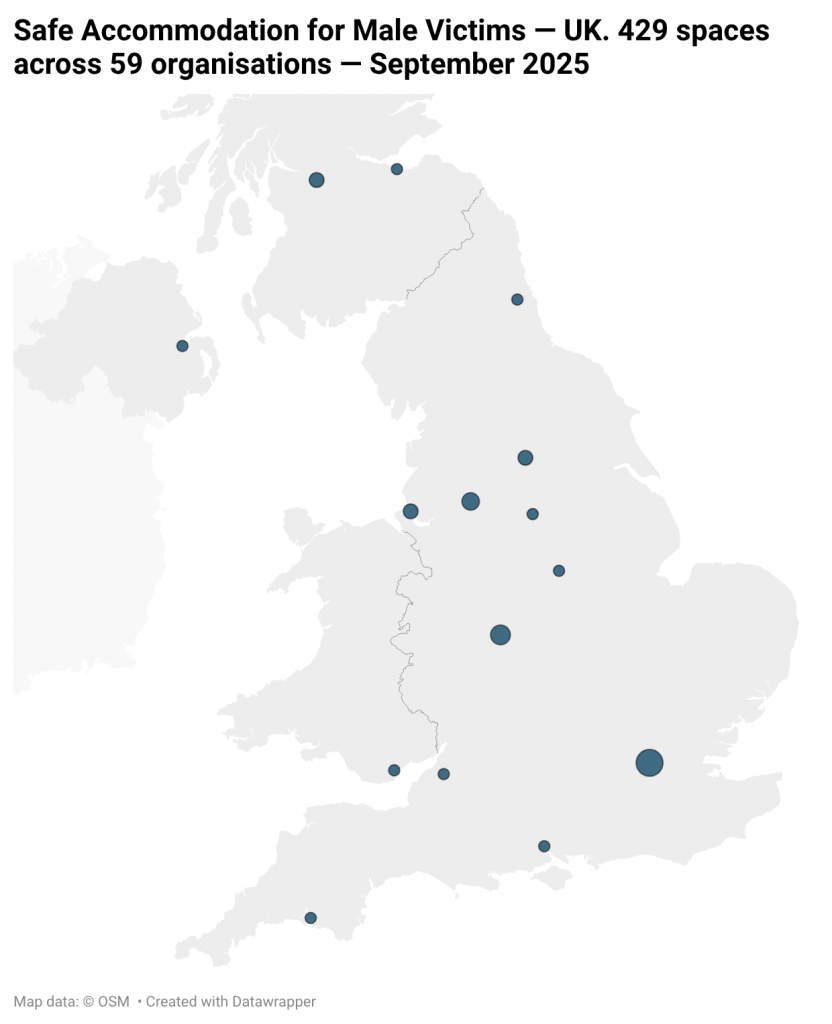
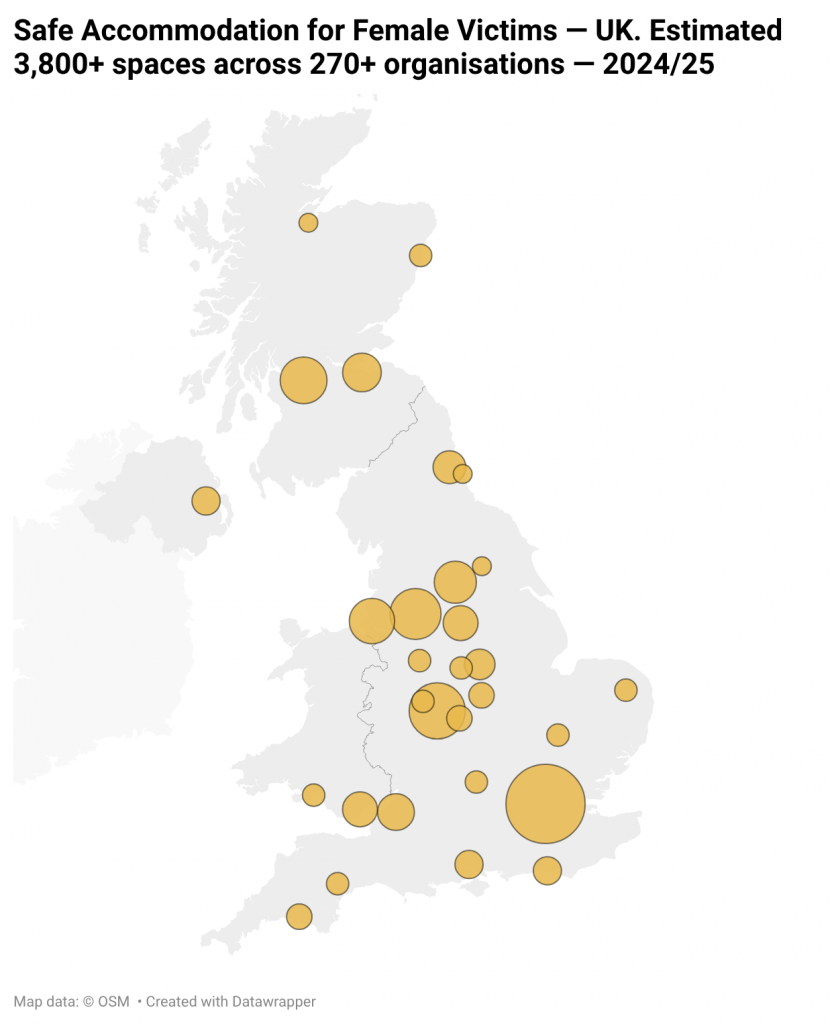
Service gap: Male victims constitute 41% of domestic abuse victims and received just 3% of safe accommodation places in 2024/25.
Social media: Content expressing generalised hostility toward men is widely distributed with little moderation action. Men who raise the issue of male victimisation are routinely labelled as misogynists. This asymmetry reflects a social environment in which the suffering of men is not afforded the same visibility or protection.
DAVIA — the Domestic Abuse and Violence International Alliance, of which PACW is the UK representative — advocates for domestic abuse policy to be science-based, family-affirming and gender-inclusive. endtodv.org
Sources: ONS (November 2025). Domestic abuse England and Wales: year ending March 2025. ons.gov.uk. ManKind Initiative (2024/25). mankind.org.uk. DAVIA: endtodv.org
Who are the key researchers in this field?
- Professor Jennifer Harman (Colorado State University, USA) — parental alienation as family violence; gender symmetry in PA
- Dr Ben Hine (University of West London, UK) — PA behaviours in the UK; fathers’ post-separation experiences
- Dr Amy Baker (USA) — adult children of parental alienation
- Karen Woodall and Nick Woodall — The Family Separation Clinic, UK. familyseparationclinic.co.uk
- Lorraine Bushfield OBE — Hendon Grandparents Association
- Janis James — The Good Egg Project, parental alienation research and support
- Murray Straus — gender symmetry in intimate partner violence
- Douglas Dutton — gender symmetry; psychopathy and domestic violence
Law and Your Rights
What do the Human Rights Act and Children Act say about family rights?
Human Rights Act 1998, Article 8 — protects the right to respect for private and family life. It is a qualified right and can be interfered with where necessary to protect the rights of others.
Children Act 1989, s.1(1) — the child’s welfare is the court’s paramount consideration.
Welfare checklist (s.1(3)) — factors include the child’s ascertainable wishes and feelings, their physical and emotional needs, harm suffered or at risk, and the capability of each parent to meet their needs.
Parental Responsibility (s.2–4) — mothers have PR automatically; fathers have PR if married to the mother at birth, named on the birth certificate after 1 December 2003, or by court order or written agreement.
Orders (s.8) — Child Arrangement Orders, Specific Issue Orders, and Prohibited Steps Orders.
Sources: Human Rights Act 1998. legislation.gov.uk/ukpga/1998/42. Children Act 1989. legislation.gov.uk/ukpga/1989/41.
What do the DSM-5 and ICD-11 say about personality disorders?
The DSM-5 (APA, 2013) classifies personality disorders categorically. Cluster B includes NPD, BPD, ASPD and HPD. Diagnoses require criteria met persistently across multiple contexts causing significant distress or impairment.
The ICD-11 (WHO, 2019) takes a dimensional approach — rating severity and applying trait domain qualifiers rather than discrete categorical diagnoses.
Sources: APA (2013). DSM-5. WHO (2019). ICD-11. icd.who.int.
What is coercive control — and is it a criminal offence?
Coercive control is a pattern of behaviour seeking to take away the victim’s liberty or freedom and strip away their sense of self — including threats, humiliation, intimidation, isolation, monitoring, financial control and psychological manipulation. Yes — it is a criminal offence in England and Wales under Section 76 of the Serious Crime Act 2015, carrying up to five years imprisonment.
Sources: Serious Crime Act 2015, s.76. legislation.gov.uk/ukpga/2015/9/section/76.
Schools and Separated Families
What school information is a parent with Parental Responsibility entitled to?
A parent with PR is entitled to school reports, attendance records, information about educational provision, SEN information and access to educational records — regardless of which parent the child lives with. Schools are not entitled to withhold information from a parent with PR without a court order specifically restricting that access.
Sources: Children Act 1989, s.2–4. Education (Pupil Information) (England) Regulations 2005.
Can a school legally refuse to communicate with one parent?
Generally, no — not without a court order. A school acting on one parent’s instruction to exclude the other parent is acting outside its legal position. If a parent with PR is being denied information: write formally to the headteacher citing the Education (Pupil Information) Regulations 2005; escalate to the governing body; contact the local authority; or seek advice from a solicitor or McKenzie Friend.
Sources: Children Act 1989, s.2–4. Education (Pupil Information) (England) Regulations 2005.
What is Gillick Competence — and does a child’s refusal to see a parent settle the matter?
Gillick competence (Gillick v West Norfolk and Wisbech Area Health Authority [1985] UKHL 7) establishes that a child under 16 can consent to medical treatment if they have sufficient maturity and understanding. Schools sometimes apply this reasoning to a child’s refusal to see a parent. This is a misapplication. A child who has been systematically conditioned to reject a targeted parent is not exercising genuine autonomous competence — they are expressing a learned response. The courts have addressed this in Re S (Parental Alienation: Cult) [2020] EWCA Civ 568.
Sources: Gillick v West Norfolk [1985] UKHL 7. Re S [2020] EWCA Civ 568. Children Act 1989, s.1(3)(a).
What does KCSIE cover — and what does it miss?
Keeping Children Safe in Education (KCSIE 2024) covers physical, emotional and sexual abuse, neglect, and specific harms including CSE, radicalisation and domestic abuse. It does not specifically name parental alienation. Vicarious abuse — the harm to a child used to deliver or caught in the middle of one parent’s abuse of the other — is not named as a distinct safeguarding category. Annual safeguarding training under KCSIE does not include content on nervous system states, functional freeze or fawning. A child in functional freeze may be entirely invisible to a teacher trained only to identify visible distress.
Sources: DfE (2024). Keeping Children Safe in Education. gov.uk. Porges, S.W. (2011). The Polyvagal Theory.
What is the primary attachment system — and what happens when a child is denied the freedom to love both parents?
Attachment theory (Bowlby, 1969–1980) describes the biological drive in human infants to form close emotional bonds with primary caregivers. These bonds shape the child’s internal working model of the world. When a child is systematically prevented from maintaining a relationship with one parent because the other parent has made that attachment unsafe to express, the damage is to the attachment system itself. The child learns that loving the wrong person is dangerous. Adults who were alienated as children often report difficulty trusting, difficulty with identity, and grief for the lost relationship that does not diminish.
Sources: Bowlby, J. (1969, 1973, 1980). Attachment and Loss. Basic Books. Baker, A.J.L. (2007). Adult Children of Parental Alienation Syndrome. W.W. Norton.
Where can schools go to learn more about trauma-informed practice?
- Dr Stephen Porges — Polyvagal Theory: polyvagalinstitute.org
- Louise Bomber — attachment and trauma in schools: touchbase.org.uk
- Dan Hughes — PACE model: danielhughes.org
- Anna Freud Centre — trauma-informed schools: annafreud.org
- ACEs research: Early Intervention Foundation at eif.org.uk
Stalking, Harassment and Online Harm
What is stalking — and how does it differ from gang stalking?
Stalking is a pattern of unwanted repeated behaviour that causes fear, alarm or distress. It is a criminal offence under the Protection from Harassment Act 1997 (as amended 2012). Many survivors experience post-separation behaviour that meets the legal definition — monitoring through mutual contacts, persistent unwanted contact, showing up at locations, monitoring social media, contact through the children. This is distinct from theories of organised criminal gang stalking which attribute harassment to highly coordinated state-level operations. If you are experiencing harassment: document everything, report to police, seek legal advice. Suzy Lamplugh Trust: suzylamplugh.org
Source: Protection from Harassment Act 1997 (as amended). legislation.gov.uk/ukpga/1997/40.
Why are Facebook support groups harmful for survivors?
- Privacy: Facebook groups — even closed ones — are not private. Screenshots are routinely taken and shared. Information has been used in family court proceedings.
- Emotional containment: Groups focused on sharing distressing experiences can keep the nervous system in sustained activation — reinforcing rather than processing trauma.
- Bad actors: Support communities attract people gathering intelligence, exploiting a vulnerable population, or acting on behalf of the abusive person using an alias.
- Legal risk: Sharing details of ongoing proceedings or making allegations in semi-public spaces can create legal liability.
Peer support is valuable. The caution is about undifferentiated, unsupervised groups where personal and legal details are shared freely and membership is unverifiable.
Practical Help
What can the DWP do for me?
- Universal Credit — income support for those on low incomes or out of work. gov.uk/universal-credit
- Discretionary consideration — Kevin Webb has presented to JobCentres in Westminster and London on the impact of narcissistic abuse. A three-month grace period was being applied in those areas. Ask your work coach whether this consideration can be applied to your situation.
- Personal Independence Payment (PIP) — for those whose mental or physical health condition affects daily living or mobility
- Employment and Support Allowance (ESA) — for those unable to work due to illness or disability
For current benefit information: gov.uk/browse/benefits
Where do I go if I am homeless or at risk of homelessness?
Contact your local council’s housing department. Under the Homelessness Reduction Act 2017, local authorities have a duty to take reasonable steps to prevent homelessness for anyone at risk within 56 days. For current guidance: gov.uk/find-local-council. Shelter provides free advice — find current contact details at shelter.org.uk
What financial help is available?
- Legal aid — means-tested funding for family court proceedings involving domestic abuse. gov.uk/legal-aid
- Citizens Advice — free advice on benefits, debt, housing and legal rights. citizensadvice.org.uk
- National Debtline — nationaldebtline.org
- Turn2Us — searches for grants and benefits. turn2us.org.uk
- Child Maintenance Service — gov.uk/child-maintenance-service
Crisis and Emergency Help
Where do I go in a crisis?
If you are in immediate danger, call 999.
If you are having thoughts of suicide or self-harm, or are in mental health crisis:
- Samaritans — 116 123 (UK, free, 24 hours). samaritans.org
- NHS — call 111 and select the mental health option
- Crisis text: text SHOUT to 85258 (UK)
- USA: call or text 988
For domestic abuse:
- National Domestic Abuse Helpline (women) — nationaldahelpline.org.uk
- Men’s Advice Line — mensadviceline.org.uk
- Galop (LGBTQ+) — galop.org.uk
- Victim Support — victimsupport.org.uk
For parental alienation:
- CAFCASS — cafcass.gov.uk
- The Family Separation Clinic — familyseparationclinic.co.uk
Contact details for helplines change. Always go directly to the organisation’s website for the most current information.
When you’re ready to direct your own life…
If you are in immediate danger, call 999.
PACW Support Line: 0333 242 5348 | National Domestic Abuse Helpline (women): 0808 2000 247 (free, 24 hours) | Men’s Advice Line: 0808 801 0327 | Galop (LGBTQ+) 0800 999 5428 | Samaritans: 116 123 | NHS 111 | Victim Support 08 08 16 89 111
USA — 988 Suicide and Crisis Lifeline | National Domestic Violence Hotline 1-800-799-7233