
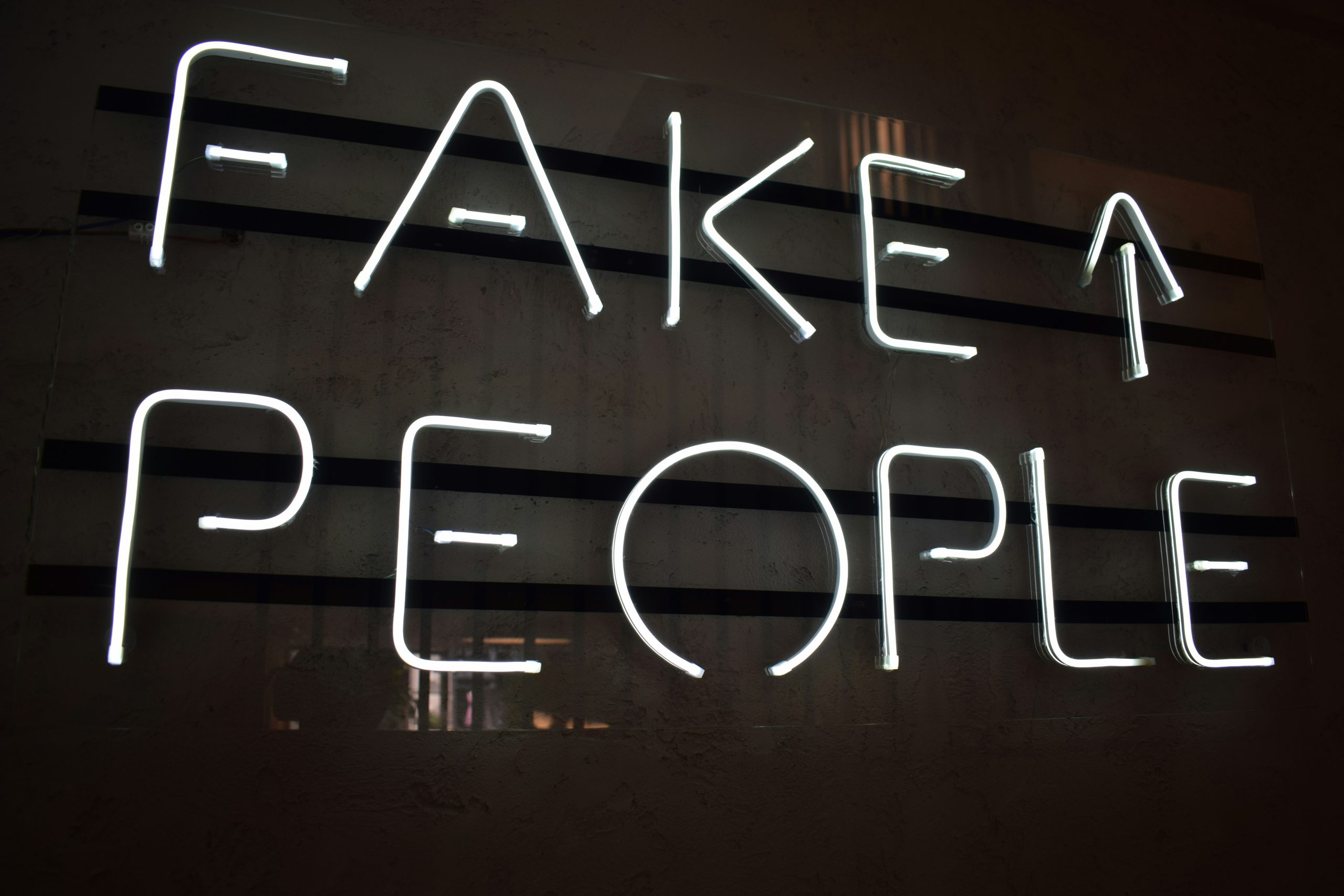
You didn’t let a bad person in. You let in someone who looked like exactly the kind of person you respect, and became a fake friend.
They were generous. They did things for people. Everyone in the group, the community, the circle liked them. They volunteered, they showed up, they seemed to put themselves out for others. They were the kind of person you want in your life, because those are the qualities you value and try to live by yourself.
So when things started to feel wrong — when they weren’t there for you, when it felt one-sided, when something didn’t add up — you looked at yourself first. Because how could someone like that be the problem?
That question is exactly how it works. And you were not stupid for asking it.
How They Got Into Your Life
This matters, because it is not random.
A lot of these people come into your life through a community setting first. A group, a club, a neighbourhood, a shared activity, a cause. Somewhere you are both involved. And in that setting, they are impressive. They are the one who organises things, who steps up, who everyone speaks highly of. You see them operating publicly, doing good, being liked. You form a view of them based on that.
That is the point. The community setting is where they build and manage their reputation. It is where they are seen doing what they want to be known for. And when someone like that starts to become closer to you — starts to become a friend rather than just someone you know — you carry that reputation with you into the friendship. You have already decided who they are. They made sure of that before they got close.
By the time you would call them a friend, the community context feels like old news. But it was never background. It was the setup.
What a Communal Narcissist Actually Is
Most people have heard the word narcissist and think of someone loud and arrogant, full of themselves, obviously difficult. That type exists. But there is another type that is far harder to identify, and far more common in everyday friendships, community groups, and social circles.
A communal narcissist does not build their sense of self around being the most successful or the most powerful. They build it around being seen as the most giving. The most moral. The most selfless. The one who does good, helps others, puts the group first. Publicly, where people can see.
The key word is seen. The good deeds, the generosity, the warmth — these are not expressions of who they genuinely are. They are how they manage how other people perceive them. Their reputation for being a good person is not a by-product of being one. It is the goal. It is what they are working on, constantly, in every room they are in.
In private — in the moments that actually cost them something, when no one is watching, when there is nothing to be gained from it — they are different. That is when you find out that the friend who seemed so warm and giving is not available. Or is available only on their terms, in a way that still works for them. Or gives you just enough to keep you there, but not the substance of what a real friend would give.
The gap between the public version and the private one is what you have been living inside. And it is disorienting, because you keep seeing the public version that everyone else sees, and it does not match your experience at all.
The ‘Generally Fine’ Friend — and Why That Is a Red Flag
There is something that needs to be said here, because it applies to a lot of people reading this.
Not every difficult friendship is with someone dramatically awful. Some of the most damaging ones are with people who are generally fine. Mostly good. Occasionally off in a way you notice but can’t quite call out, because most of the time they’re okay.
They say something that lands wrong and you file it away. They let you down once and you explain it away. There’s an incident, a moment where they showed you something, and then they go back to being the person you like and you go back to trusting them. And that cycle repeats.
What is actually happening in that cycle is that you are being trained. Every time you discount what you saw and return to the good version, you are practising the thing that will eventually cost you more. You are building a habit of overriding your own instincts about this person. You are getting better and better at going back to their good face, no matter what the other face showed you.
Those occasional moments where they are off — that is not them having a bad day. That is them showing you who they are. People show you who they are in the moments when they are not performing. The performance is consistent. The slips are the truth.
If someone in your life is generally fine but every so often does something that makes you feel unseen, used, dismissed, or vaguely uneasy — and then goes back to normal and you follow them there — pay attention to that. The ‘generally fine’ friend who hurts you later is almost always someone who showed you something early on that you chose not to hold onto.
That is not a criticism of you. It is how we are conditioned to operate, especially those of us who were taught that giving people the benefit of the doubt is the decent thing to do. It is the decent thing to do. It is also the thing that gets used against us.
The Crumbs
One of the clearest signs that a friendship is not what it appears to be is the pattern of crumbs — just enough to keep you in, not enough to be a real friend.
A message when they sense you pulling back. A gesture when the friendship is at risk. One genuine moment that reminds you of the person you thought they were. Just enough that when you start to question whether this is actually working, you have something to point to. “They did come through that time.” “They did say that kind thing.” “They were really there for me last year.”
Those moments are real. They are not entirely manufactured. But they are rationed, and they tend to arrive at specific times — when you’ve gone quieter, when you’ve stopped reaching out as much, when something in your behaviour signals that you might be reconsidering. That is when the warmth reappears. And once you are back, it recedes again.
If you have noticed that pattern — more present when you’re withdrawing, less present when you’re reliably there — that is not coincidence. That is management. You are being managed, carefully, by someone who knows how much they need to give to keep you in place.
Why You — and Why It Worked
Because you have genuine values. That is the full answer.
You do not perform goodness. You just live it. You give without keeping score. You are loyal. You take responsibility seriously. You assume good intent in others because that is how you operate. You give people the benefit of the doubt because that is what you believe decent people do.
All of that is real and it is good. It is also visible. And to a communal narcissist, it is useful.
They are specifically drawn to people who will not challenge the performance. People who will show up consistently. People who give without expecting anything back. People whose own values lead them to assume good values in others. People who, when something feels wrong, look inward before they look outward.
A communal narcissist does not want friction. They want supply — the warmth, the loyalty, the reliability, the good reputation that comes from being close to a person like you. And they know that the way to keep that supply is to give you just enough of the performance that your own values do the rest of the work. Your loyalty keeps you there. Your reluctance to judge keeps you there. Your habit of returning to their good face keeps you there.
They were counting on all of that. It is not an accident. It is how they operate, and it works specifically because of who you are.
It Often Costs You More Than You Realise
This type of friendship rarely just costs you emotionally. Looking back, it has usually cost more than that.
Time, repeatedly given to someone who was not giving it back in the same way. Energy spent listening, supporting, showing up. Sometimes money — the favour that was never returned, the thing you covered, the times you put yourself out without a second thought because that is what you do for people. Sometimes it has affected your standing in a shared group or community. Sometimes your reputation, because when the friendship ends or shifts, the communal narcissist’s version of events is the one that travels.
You were not keeping score while it was happening. You never expected anything back. That is not a flaw — that is how you operate. But the fact that you were not counting does not mean they were not. They were taking consistently from someone who was giving consistently, and they had no real intention of balancing that out.
You did not notice at the time because you were not watching for it. They were banking on that.
What Happens When You Find Out
When it finally becomes clear — not just a nagging feeling but something you can no longer explain away — it does not just feel like losing a friend. It feels like something has been taken from you.
You believed in them. You valued the person they presented. You felt fortunate to have someone like that in your life. And finding out that the version you believed in was not real — that the generosity had limits, that the warmth was managed, that they knew all along they were not going to be there for you the way you were there for them — that is a different kind of hurt to a simple falling out.
It shakes your confidence in your own judgement. If you got this so wrong, what else are you getting wrong? Who else in your life might not be who you think they are? That doubt is one of the most damaging things this leaves behind, and it is one of the things that takes longest to recover.
And there is often a sense of having been foolish. Almost an embarrassment. How did you not see it? The answer is that you were not supposed to see it. They are skilled at not being seen for what they are. The performance only works when the person watching it believes it — and they made sure you did.
Who We Choose to Have in Our Lives
This is something worth sitting with, not as a criticism, but as something genuinely useful going forward.
The way that a communal narcissist moves from community acquaintance to person in your inner circle is something that happens gradually and deliberately. The line between someone you know and someone you trust is one they work to blur. And the more impressive their public reputation, the easier that blur is to achieve, because you have been forming a view of them long before they ever got close.
Going forward, who gets a place in your life — really in your life, with access to you, your time, your trust, your energy — is something that deserves far more care than most of us have given it. Not suspicion. Not assuming the worst of everyone. But being slower to give the inner circle access. Watching behaviour over time and in different contexts, not just in the ones where someone is performing well. Noticing the moments where they are off, and not dismissing them.
And being honest about the friendships that are already there. The ones that are mostly fine but sometimes not. The ones where you repeatedly feel something and then talk yourself out of it. The ones where you go back to the good face again and again, because the good face is real enough to make the other one easy to forget.
Those friendships are the ones to look at most carefully. Because by the time something bigger happens, you will have spent years conditioning yourself to return, to explain it away, to not trust what you saw. The earlier you can see the pattern clearly, the less it costs you.
This Is Not About Becoming Closed Off
None of this means becoming someone who trusts no one, who keeps everyone at arm’s length, who approaches every friendship as a potential threat. That is not the answer, and it is not a good life.
What it means is understanding how this has worked so that it is harder to work again. Understanding that your values — the real ones, the ones you actually live by — are not the problem. They are not what needs to change. What needs to change is the assumption that everyone else is operating from the same values. Some people are not. And the ones who aren’t are often the most convincing, because they know exactly what those values look like and they know how to perform them.
The goal is not to stop being the person you are. It is to stop letting the wrong people benefit from it.
How We Can Help
If this has described something you have been through, or something you are still trying to make sense of, there is support here that understands this specifically — not just the facts of what happened, but what it has done to you, and to your trust in your own judgement.
- One-to-one coaching to understand what happened and work through the impact it has had on you
- Somatic trauma support — for what this has left in the body, not just in the mind
- In-person support groups across the UK, with others who have been through the same thing
- Zoom group sessions for those who cannot travel or are not in the UK
- Support with rebuilding trust in yourself and your own instincts — which is usually the first thing this takes from you
You were not wrong to trust them. You were not foolish for believing in the person they presented. You were dealing with someone who put consistent effort into being believed — and who specifically chose people like you because they knew it would work.
That is not your fault. That is what they do.
Kevin R Webb (MEd.L, BEd., BA Fd., QTS)
Somatic Trauma Informed Narcissistic Abuse Coach


